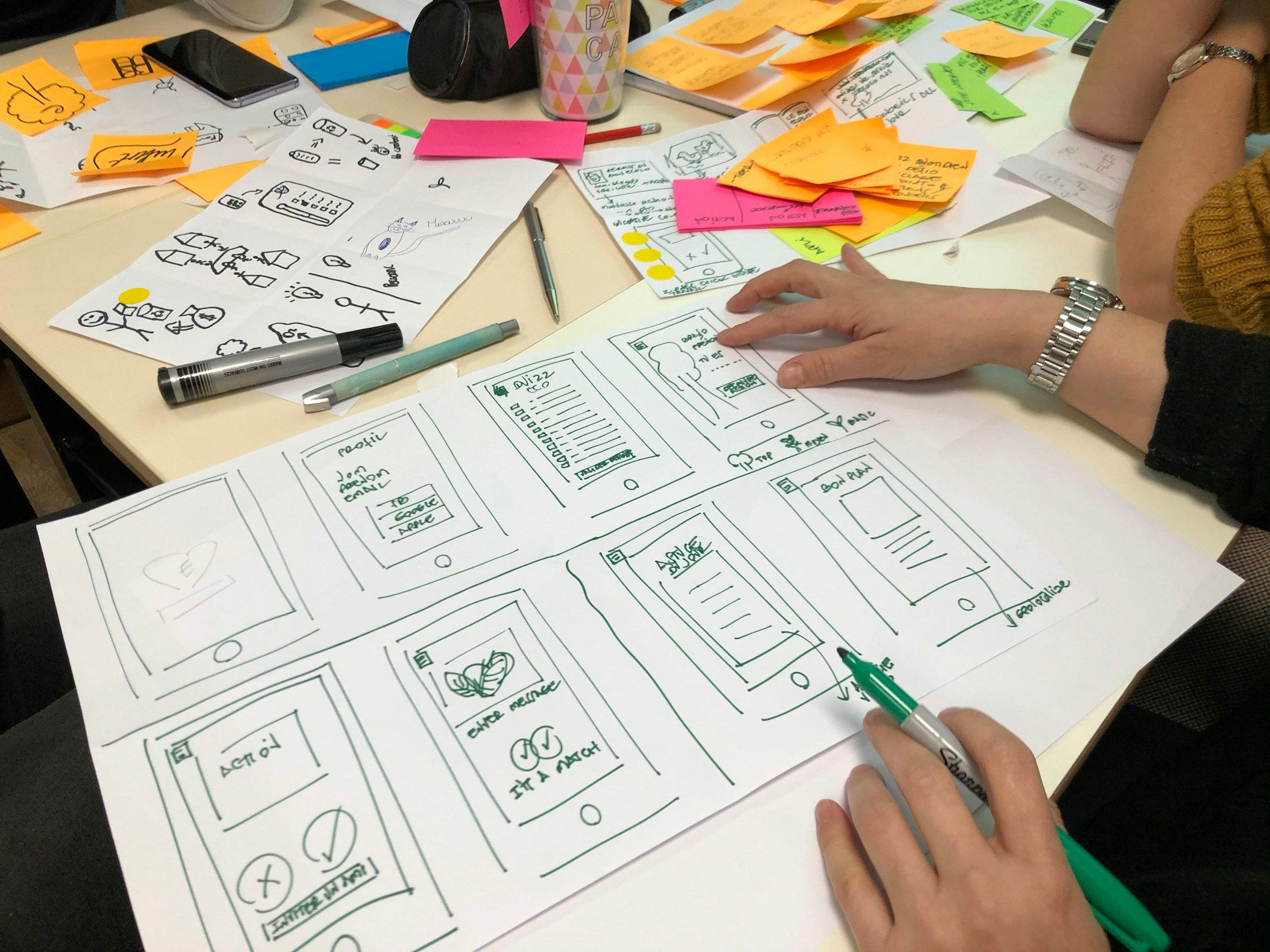
Endless revision cycles usually get blamed on taste (“we just can’t find the right designer”). Far more often, the actual cause is upstream: a brief that never named the thing that would make the work succeed or fail, so every review becomes a fresh, unanchored opinion.
What a vague brief looks like
“Make it feel modern and clean, aligned with our brand” is not a brief. It’s a mood. It gives a designer nothing to aim at and nothing to check the result against, so the first draft is a guess, the feedback is a reaction rather than a decision, and the cycle repeats because nothing was actually agreed upfront.
What an actual brief needs
- The specific problem being solved, for a specific user, in a specific moment, rather than a general feeling.
- What “working” looks like, stated in advance: a metric, a task someone should be able to complete, or a genuine constraint the design has to satisfy.
- The constraints that are non-negotiable, named upfront: technical limits, brand rules, accessibility requirements, so they’re not discovered three drafts in.
- Examples of what’s wrong, as well as what’s right. A screenshot of a competitor’s approach and specifically what doesn’t work about it is often more useful than a vague mood board.
- One clear decision-maker, agreed in advance, so feedback doesn’t arrive as five conflicting opinions in the same round.
Why this cuts revisions
Every point above turns a subjective “do I like this” review into an objective “does this solve the stated problem” review. That doesn’t eliminate feedback. It makes feedback specific and actionable, which is what actually shortens revision cycles, not finding a designer who happens to guess right the first time.
Briefing a project and want a second pair of eyes on the brief before the work starts? Get in touch.
← Back to all insights